The problem
Mise started as a fun way to combine AI with cooking. The problem itself is very ordinary: you are at work thinking about dinner, you cannot remember what is left in the fridge, and you do not feel like searching for a recipe. Even at home, checking every ingredient and deciding what to make can feel like more effort than the cooking.
I wanted an app that could remember the pantry and make the decision easier. It should be useful for one person, but also handle a household where tastes, schedules, and shopping are shared.
What I built
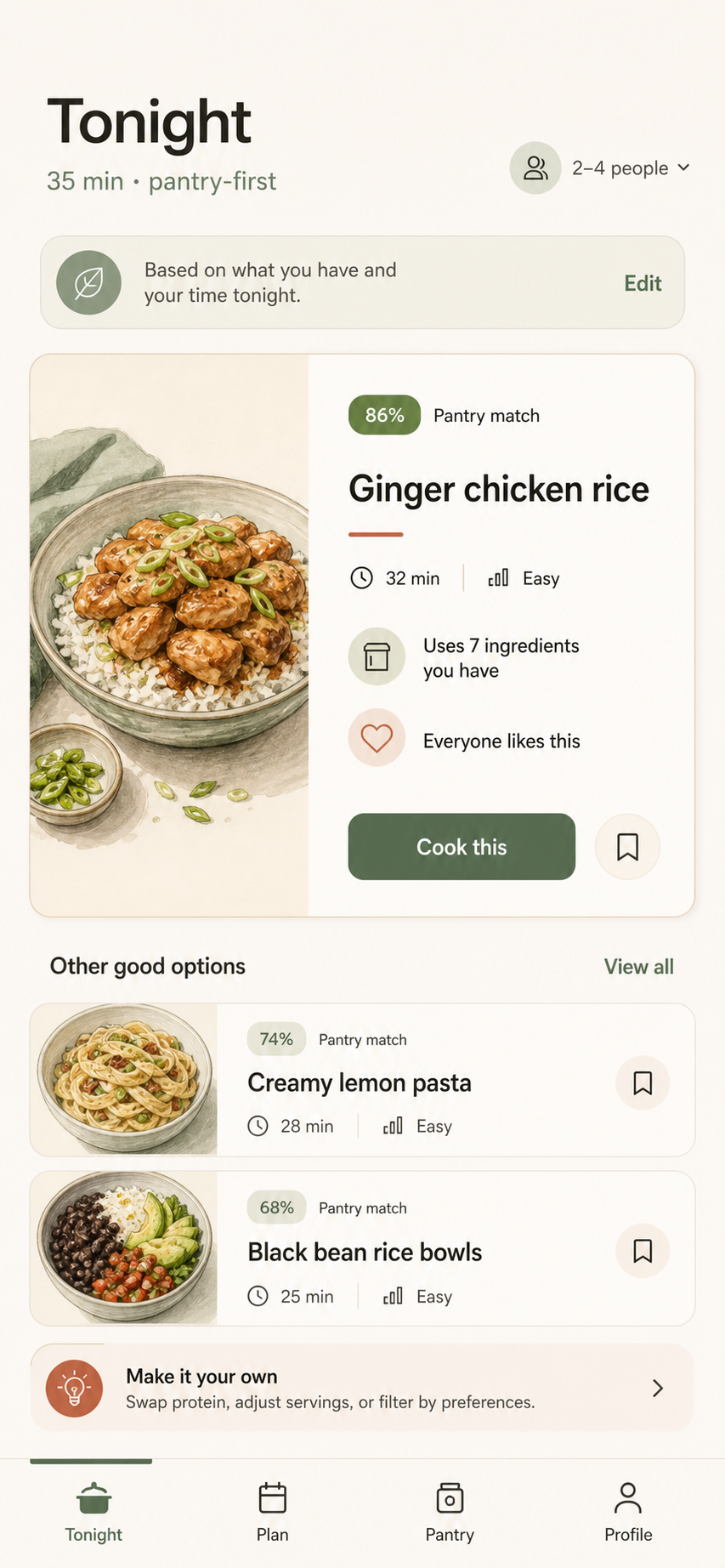
Mise has two main recommendation modes. Tonight prioritises what is already in the pantry and how much time is available. This Week looks further ahead, balancing variety while reusing ingredients so the grocery list does not become five unrelated sets of items. Both use the same scoring system with different weights, which keeps their recommendations consistent.
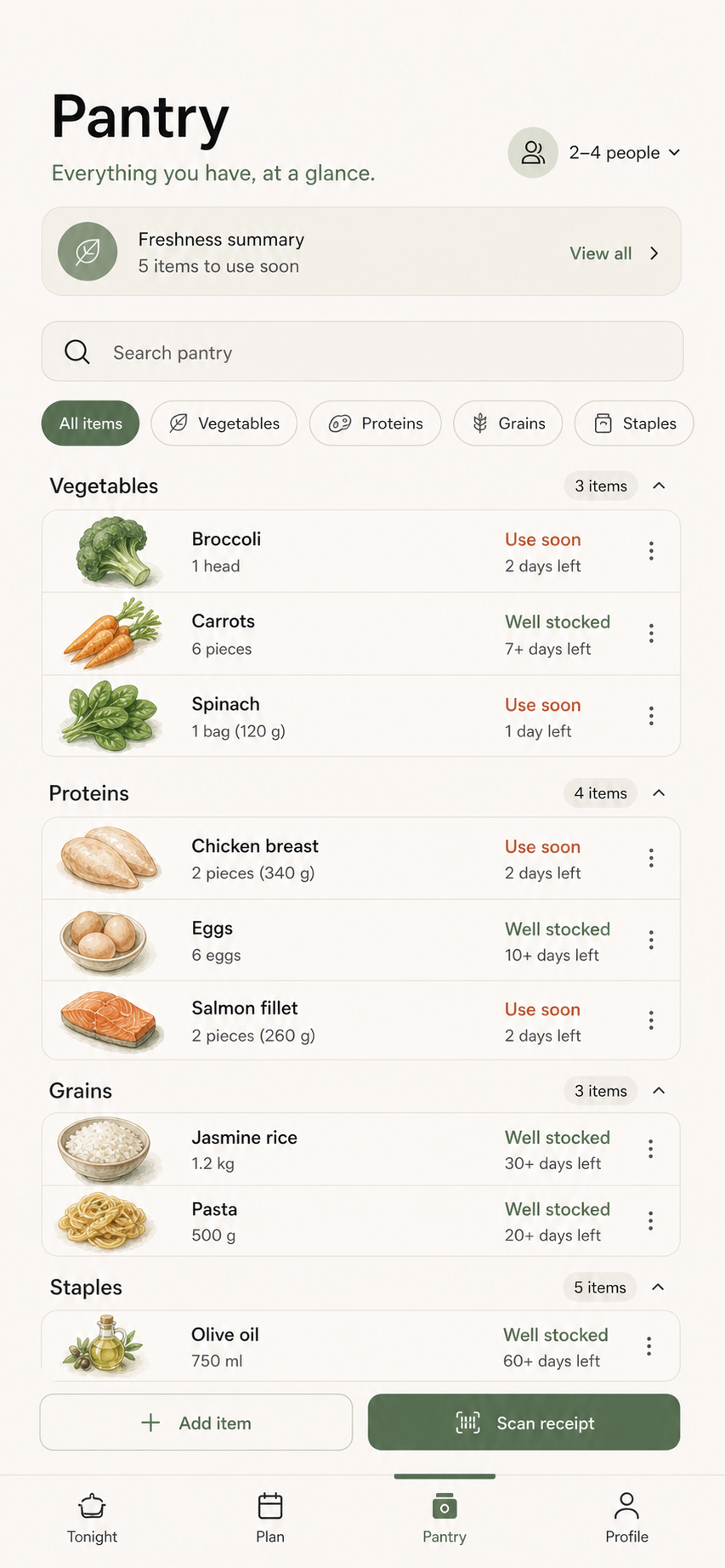
Pantry matching is flexible rather than all or nothing. Known substitutes receive partial credit, and a new user is not punished for having an incomplete inventory. Ingredients can be added manually or captured from receipts and images. Recipes are collected from public web sources and can also be imported or contributed by users. AI turns messy recipe pages or pasted content into a consistent structure, but it must return a valid recipe instead of filling missing information with a guess.
Household members share the same pantry and plan. They can react to possible meals separately, see where preferences overlap, and turn the selected plan into a grocery list containing only what is still needed.
Decisions and tradeoffs
One scoring function, two weight configs
Tonight and This Week use the same signals, including pantry match, available time, variety, preferences, and rating history. They call one ranking function with different weights instead of maintaining two recommendation systems that could drift apart.
Substitutes and cold starts get partial credit, not zero
A strict pantry check would make the app frustrating before someone has entered enough data. A known substitute receives partial credit, while an empty pantry is treated neutrally. The recommendations can therefore remain useful while the inventory is still incomplete.
Result
Mise is almost finished, but it is not ready for release yet. The core path works from pantry tracking to dinner recommendations, weekly planning, household choices, and grocery needs. The remaining work is mostly refinement and building enough reliable recipe coverage for the recommendations to stay varied. I do not use it very often myself for the simple reason that I rarely cook, which may be the most honest limitation of the current testing process.